Published - 5th Mar 2026
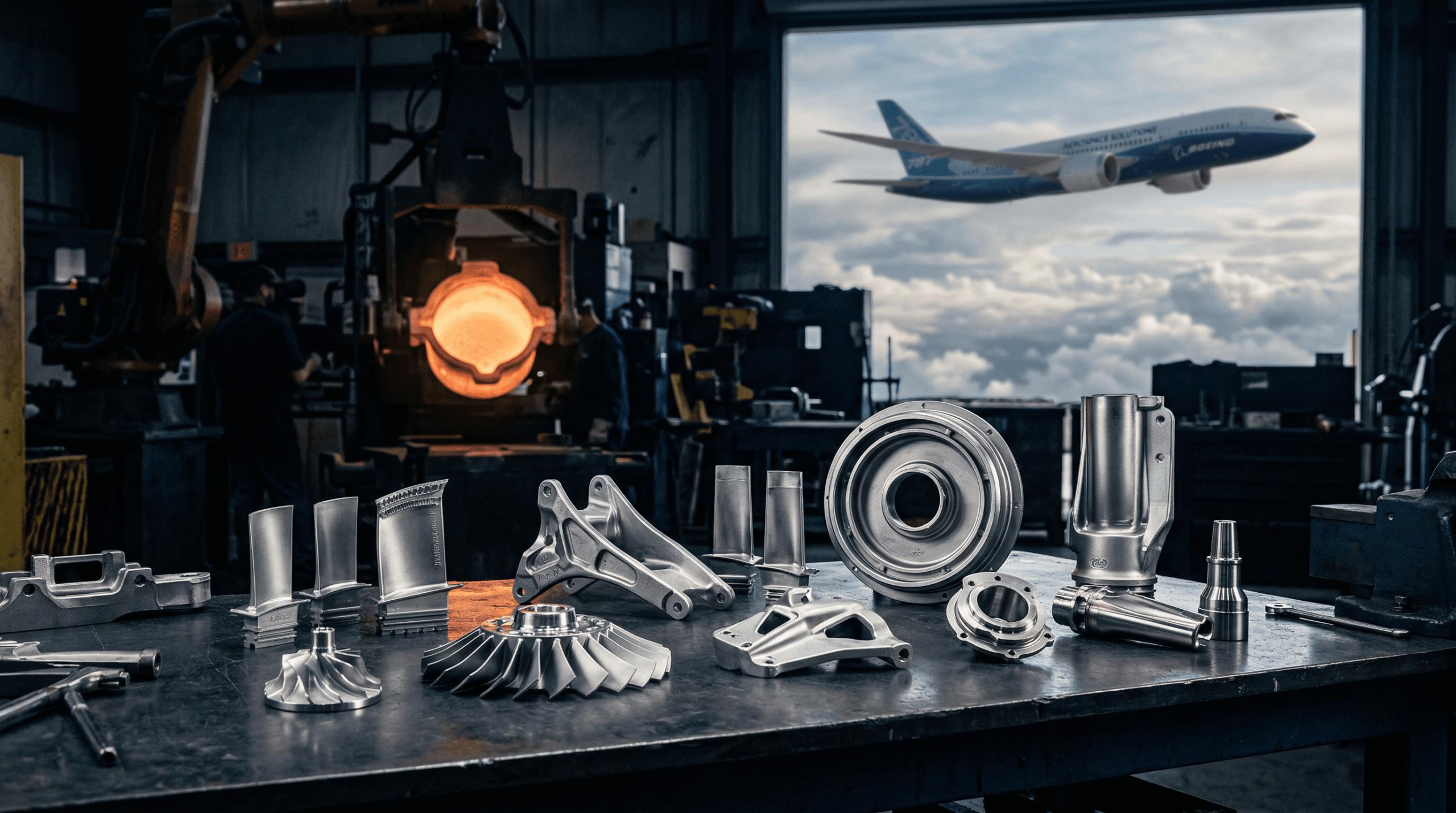
Aerospace procurement carries a high level of technical and commercial responsibility. Components must meet demanding performance requirements, comply with regulatory standards and deliver reliable service over extended operating lives. At the same time, procurement teams are expected to manage cost, programme schedules and supply chain resilience across increasingly complex global networks.
In this context, manufacturing process selection has direct implications for risk, repeatability and long-term value. Aerospace investment casting offers a proven route to producing complex metal components with structural integrity and dimensional consistency, while supporting weight optimisation and efficient material use.
This guide is intended for procurement professionals and supply chain managers sourcing precision cast components for aircraft programmes in the UK and internationally. It outlines where investment casting is most appropriate, what considerations influence supplier selection and how to approach sourcing decisions with greater clarity.
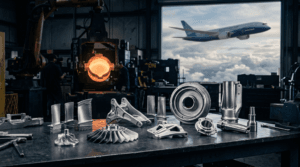
Aerospace investment casting offers a proven route to producing complex metal components with structural integrity and dimensional consistency. For a broader guide to the investment casting process, see our investment casting guide for engineers and buyers.
For procurement teams, the benefits of investment casting are clear:
Design flexibility
Investment casting supports intricate geometries, thin-wall sections and detailed features that are difficult to achieve using alternative processes. This is particularly useful for brackets, housings and structural fittings where space constraints and weight targets are critical.
Weight optimisation
The ability to cast near-net-shape components helps designers remove unnecessary material without compromising strength. In aircraft manufacturing, incremental weight savings can contribute to measurable efficiency gains over time.
Dimensional repeatability
A well-controlled investment casting process provides consistent tolerances across production batches. For buyers managing long-term programmes, this reduces variability, rework and inspection challenges.
Material capability
Aerospace investment casting can accommodate a range of high-performance alloys, including precipitation-hardening stainless steels such as 17-4PH, nickel-base superalloys and selected aluminium grades. This allows material selection to meet strength, corrosion resistance and environmental performance requirements.
Reduced secondary operations
Because the casting is produced close to its final form, machining is typically limited to critical surfaces and interfaces. This can simplify the overall manufacturing route and reduce cumulative cost across the supply chain.
Investment casting forms part of our wider aerospace manufacturing capability, supporting structural and interior components across UK and international programmes. While requirements vary between programmes, the process is particularly suited to components that combine strength with weight efficiency and geometric complexity.
Aircraft seating and interior structures
Aircraft seating assemblies provide a clear example of where investment casting supports performance and weight targets. Structural elements within seating systems must remain durable while contributing to overall weight efficiency.
Precision cast components are commonly used for internal structural parts, brackets and mounting features across different seating classes. The process allows complex geometries to be formed in a single component, reducing unnecessary mass and supporting consistent production.
Structural fittings and brackets
Investment casting is also widely applied to structural fittings within airframes and cabin assemblies. Brackets, housings and support components often require reliable mechanical performance alongside controlled tolerances.
Because the casting is formed close to its final shape, the process can simplify part geometry while maintaining the integrity required for aerospace service conditions.
Secondary systems and mechanical assemblies
Beyond structural and interior applications, investment casting is used in a variety of mechanical and support systems where part complexity and material efficiency are important.
In these cases, the value of the process lies in producing components that meet aerospace performance requirements while supporting repeatable production across programme lifecycles.
Material selection is a core part of aerospace procurement, because the choice of metal for investment casting directly affects strength, durability, corrosion resistance and weight. The chosen alloy must meet structural requirements while remaining commercially viable across the life of the programme.
Investment casting supports a range of aerospace alloys, including exotics and selected stainless steel grades. These materials are typically chosen for their balance of mechanical performance and weight efficiency.
Structural performance
For load-bearing applications, consistent mechanical performance across production batches is essential. Process control, heat treatment and inspection discipline are therefore as important as the nominal alloy specification.
Weight and efficiency
Weight reduction remains a priority in aircraft manufacturing. Investment casting supports near-net-shape production, allowing complex geometries to be formed directly and limiting unnecessary material removal. Lightweighting in aerospace components helps to reduce both operating costs and the environmental impact of flights.
Service environment and traceability
Material suitability must reflect operating conditions, including cyclic loading, vibration and environmental exposure. Equally important is full traceability. Buyers should expect documented certification, batch control and inspection evidence aligned with aerospace audit requirements.
At Investacast, material selection is supported by structured process control and documented quality systems aligned with the expectations of performance-critical sectors. Further guidance on selecting materials for investment casting is available in our dedicated materials overview.
Manufacturing process selection influences cost, performance and risk. Investment casting, pressure die casting, forging and precision machining each serve different roles depending on geometry, loading conditions and material requirements.
Investment casting
Well-suited to complex geometries and thin-wall sections, investment casting forms components close to final shape, reducing material waste and limiting secondary machining. It is often advantageous where part consolidation supports weight and assembly efficiency.
Forging
Forging is typically selected for heavily load-bearing components where enhanced grain structure and directional strength are required. It may be appropriate where geometry is simpler but strength margins are critical.
Further insight into structural considerations when comparing forging and thin-wall castings is discussed in our seating-focussed analysis.
Pressure die casting
Pressure die casting is commonly used for lightweight structural or semi-structural aerospace components where repeatability, surface finish and weight are priorities. In aircraft seating and interior assemblies, aluminium die cast parts can provide consistent dimensional control and cost-effective production at higher volumes.
Precision machining
Precision machining remains essential for tight-tolerance interfaces and specialised materials. However, machining complex components from billet can involve greater material removal and longer cycle times compared with near-net-shape casting.
Read more about how Investacast achieves cost downs by casting components traditionally machined from solid.
Procurement implications
Investacast helps procurement teams assess alternative manufacturing processes at an early stage, taking account of performance as well as cost. This includes in-house capabilities such as investment and pressure die casting, and a broad range of casting, forging and precision machining expertise available through Expromet Technologies Group, including overseas manufacturing options.
This enables Investacast to advise aerospace procurement teams on manufacturing routes at the design stage, enabling coordinated sourcing across structurally demanding and lightweight components within a single manufacturing framework.
In selecting an aerospace investment casting supplier, procurement teams must assess technical competence, documented quality systems and long-term programme stability as well as process capability.
Standards, certification and compliance
Aerospace components operate within tightly regulated supply chains. Suppliers should demonstrate recognised quality management systems and structured compliance processes.
Buyers should expect:
For defence-related or security-sensitive programmes, JOSCAR registration gives procurement teams confidence that suppliers meet critical conditions standards on quality management, risk management, cybersecurity and operational performance. JOSCAR provides a single repository for pre-qualification and compliance information certification, demonstrating to key purchasers in the aerospace and defence sectors that approved suppliers are fit to supply into these extremely demanding industries.
Engineering and design support
Early engineering input reduces downstream risk. Suppliers should review drawings, assess manufacturability and suggest refinements that improve consistency and efficiency.
Process control and inspection
Consistency across production batches is critical. Suppliers should demonstrate controlled environments, structured inspection procedures and clear documentation.
Programme stability
Aerospace programmes run over extended timeframes. Buyers require confidence in production continuity, clear communication and organisational stability.
Integrated capability
Investacast operates with ISO 9001-certified systems and structured process control, and is JOSCAR certified. As part of Expromet Technologies Group, this is reinforced by integrated investment casting, pressure die casting, forging and machining capability, supported by coordinated engineering input and programme oversight. For aerospace procurement teams, this enables consolidated sourcing of performance-critical components within a controlled and compliant framework.
“As an expert UK aerospace casting company, Investacast customers are increasingly relying on our in-house technical expertise, extensive UK manufacturing capabilities and global supply chain to find innovative solutions to their complex engineering challenges,” says Robert Guest, CEO of Expromet Technologies Group. “We support the design of products that are optimal for their end use, whilst minimising production costs.”
Aerospace investment casting provides a reliable route to producing complex, high-integrity components where weight efficiency, structural performance and repeatability are critical.
Effective sourcing depends on early technical evaluation, appropriate material selection and disciplined quality control throughout production. Certification, traceability and long-term stability remain central to managing programme risk.
Investacast combines structured engineering input, ISO 9001-certified systems and JOSCAR registration with the wider manufacturing and programme oversight capabilities of Expromet Technologies Group. This integrated approach enables aerospace procurement teams to reduce risk, maintain compliance and support long-term performance across UK and international programmes.
If you are evaluating aerospace investment casting for an upcoming programme, our engineering team can review component drawings and advise on manufacturability, material suitability and production planning at an early stage.
What is aerospace investment casting?
Aerospace investment casting is a precision manufacturing process used to produce complex metal components for aircraft and related systems. It enables near-net-shape production, supporting tight tolerances, weight efficiency and consistent mechanical performance across production batches.
What certifications should an aerospace investment casting supplier hold?
At a minimum, suppliers should operate under an ISO 9001-certified quality management system with documented inspection and traceability procedures. For defence-related aerospace programmes, JOSCAR registration provides additional independent assurance across governance, information security and quality compliance.
When should aerospace buyers choose investment casting instead of forging or machining?
Investment casting is often suitable for components with complex geometries, thin-wall sections or opportunities for part consolidation. Forging may be preferred for heavily load-bearing parts requiring enhanced grain structure, while precision machining is essential for tight-tolerance interfaces. The appropriate choice depends on performance requirements, geometry and production scale.
If you have a project, talk to our experienced sales team
Contact us